

The „Conductor-in-Residence” program, which has been running continuously since 2013, is one of the most important initiatives of the National Institute of Music and Dance. Its aim is to support young artists at the beginning of their careers, giving them the opportunity to gain experience working with professional orchestras and renowned conductors. In the 2025–2026 artistic season, Katarzyna Marek was among those selected for the program. She is completing her residency with the Sinfonietta Cracovia Orchestra, thus beginning an important stage in her professional career.
We encourage you to read the profile of the conductor, which we have presented using, among other things, an interview she gave to Presto magazine in September 2025. We will soon also enrich the report with audio recordings of the artist's comments, in which she shares her reflections on her personal perception of art, experiences during rehearsals and concerts, and the circumstances that led her to participate in the program.
An important element of the following description are also the reviews of the mentors themselves, Katarzyna Tomala-Jedynak and Alexander Humala, renowned conductors whom Katarzyna Marek accompanied while working with our ensemble.
Katarzyna Marek, Conductor in Residence of Sinfonietta Cracovia during 2025-2026 season. Photo by Grzesiek Mart.

Szymon Paruzel: What does the residency under the NIMiT program involve?
Katarzyna Marek: The aim of the program is to create a space for young conductors to develop by enabling them to work with professional ensembles. Not only orchestras participate in the initiative, but also musical and opera theaters. I was particularly keen to improve my skills in working with an instrumental ensemble. In the coming season, I will begin a residency with a chamber orchestra. It will involve assisting four conductors and independently preparing and conducting two concerts. Katarzyna Tomala-Jedynak is supervising my residency.
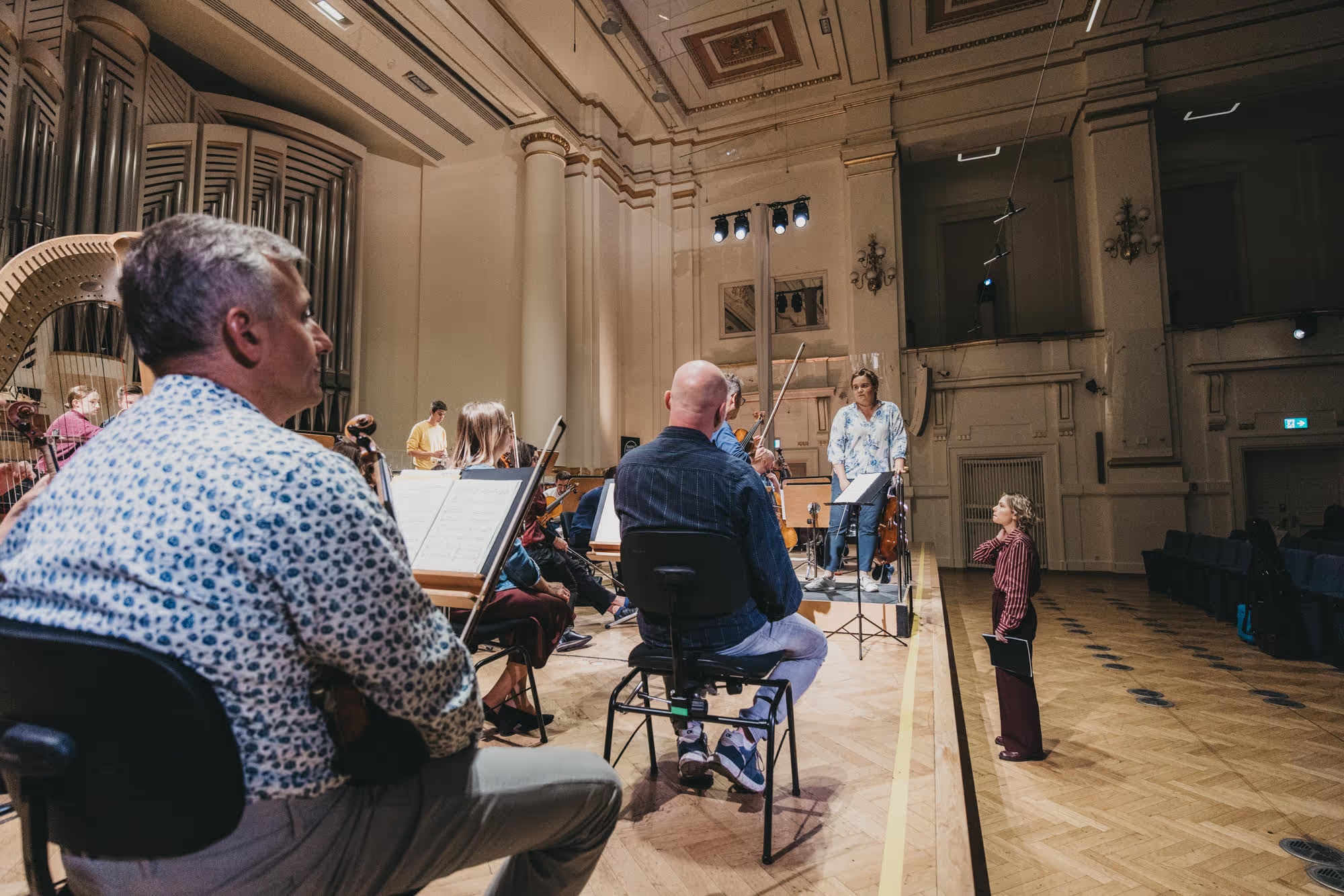
Photo by Grzesiek Mart, Krakow Philharmonic, September 14, 2025
What are these projects?
In the first project, I will be assisting Katarzyna Tomala-Jedynak in preparations for the inaugural concert, which will take place on September 14. I am very much looking forward to meeting Bartłomiej Nizioł, who will perform the solo part in Leonard Bernstein's Serenade after Plato's “Symposium.” The program will include works by Krzysztof Penderecki and Ralph V. Williams, as well as Dmitri Shostakovich's Chamber Symphony. It is a very personal work, full of contrasts and drama. Performing this piece shortly after the 50th anniversary of Shostakovich's death is of particular significance to me – he is one of my favorite composers.
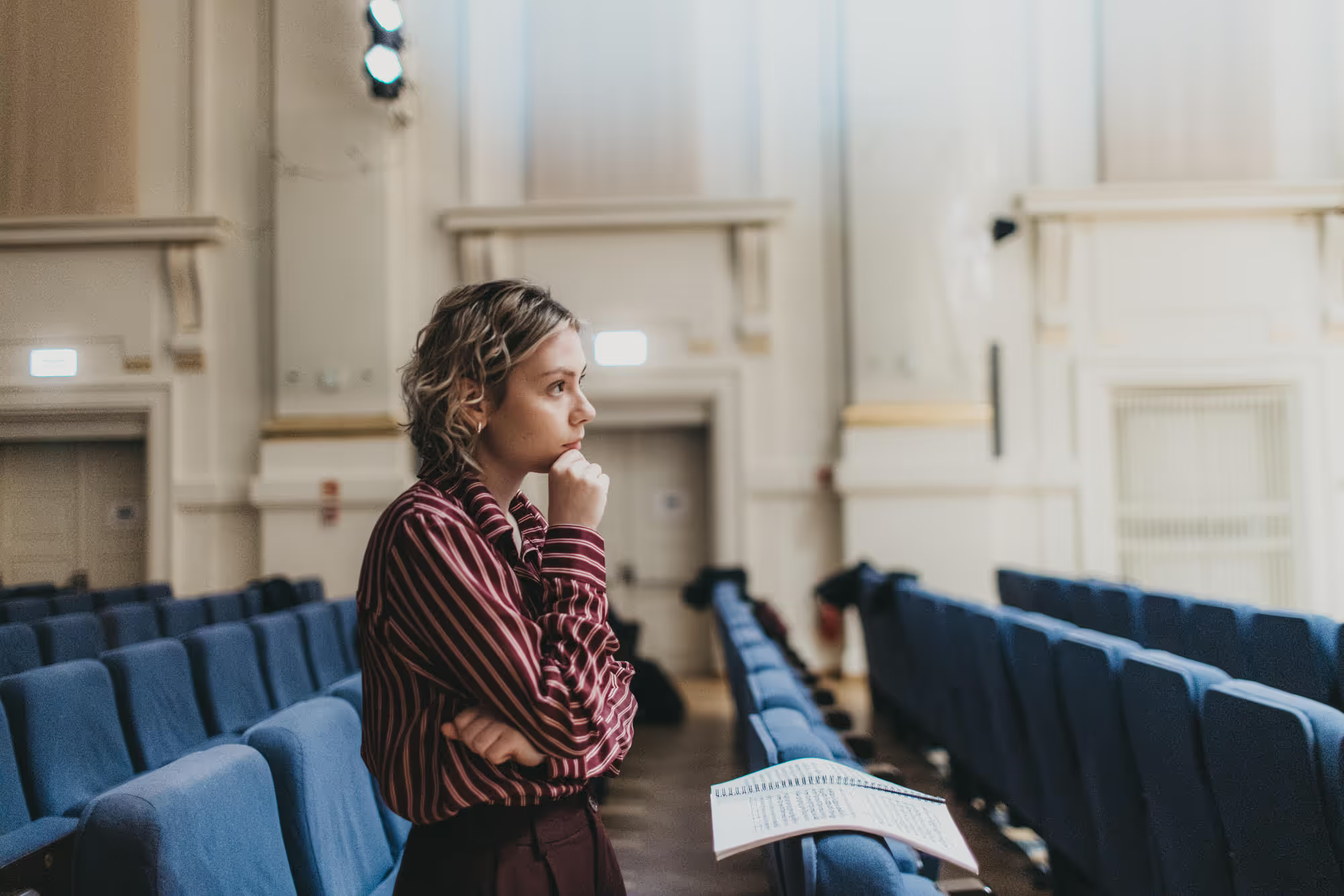
Photo by Grzesiek Mart, Krakow Philharmonic, September 14, 2025
In November, Sinfonietta Cracovia will perform with the Polish Radio Choir – Lusławice under the baton of Alexander Humala, conductor and choirmaster. The program will include Arvo Pärt's Berlin Mass. I rarely work with vocal ensembles, so I am looking forward to gaining valuable experience. I am also looking forward to meeting Ildikó Juhász, the soloist in Levente Gyöngyösi's Piccolo Concerto. We know each other from working together on my diploma concert with the Sudeten Philharmonic, where she is the principal flutist.
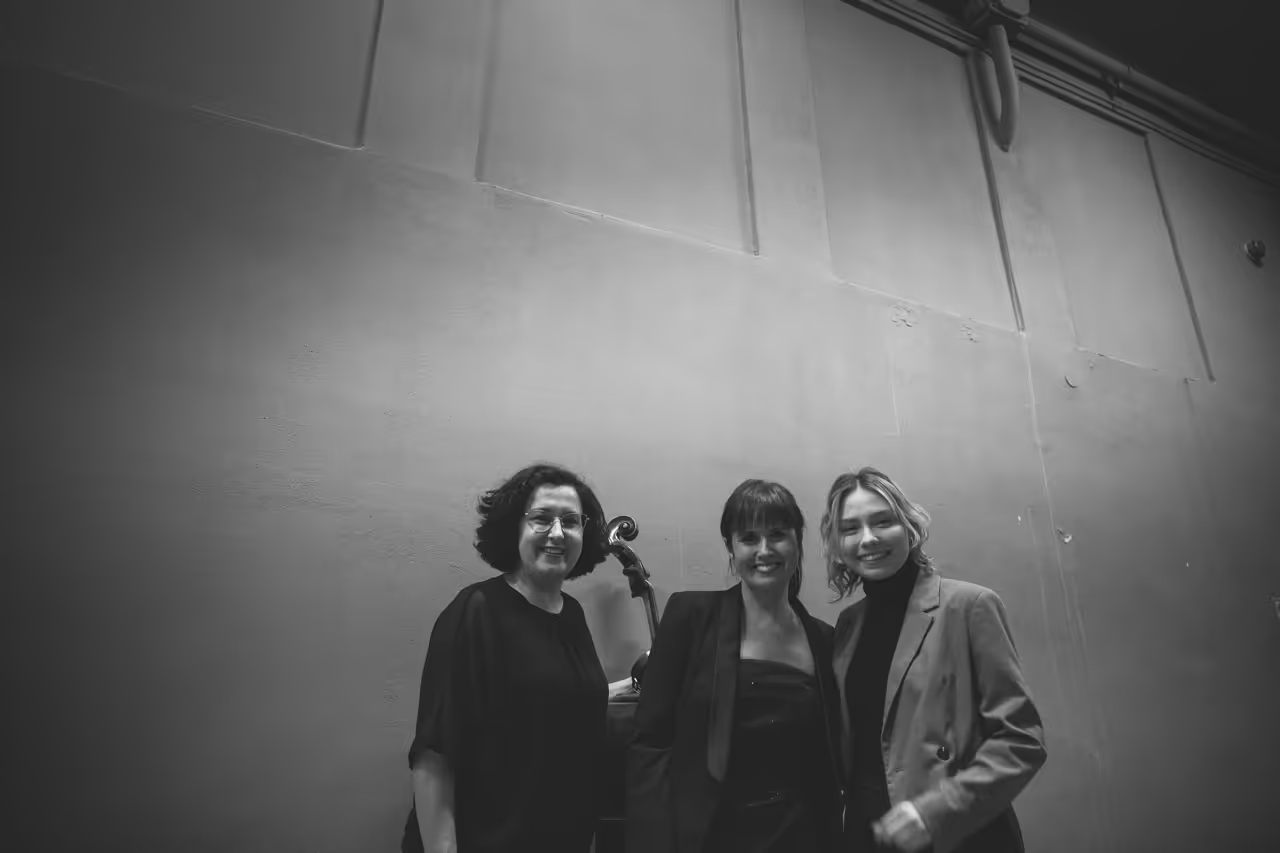
Photo by Piotr Markowski, Łaźnia Nowa Theater, November 27, 2025
Ms. Katarzyna Marek presented herself as an attentive, competent person who is truly committed to the artistic process. Her presence at rehearsals, communication with the conductor and soloist, ability to support the ensemble, and musical sensibility were truly valuable. Working with her is very rewarding and thoroughly professional.
Alexander Humala – conductor
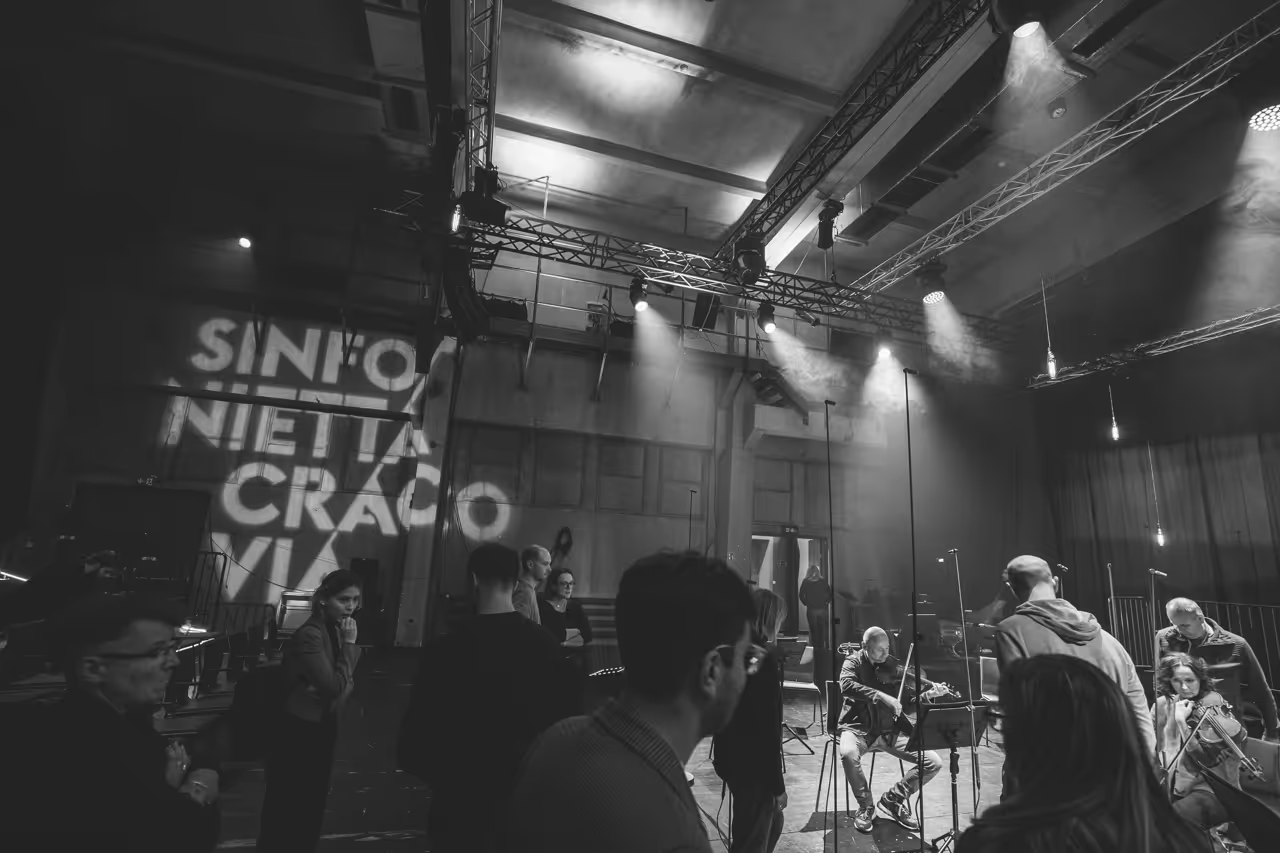
Photo by Piotr Markowski, Łaźnia Nowa Theater, November 27, 2025
In March, I will be assisting two artists – John Axelrod and Błażej Wincenty Kozłowski. I have had the opportunity to attend Sinfonietta concerts conducted by Axelrod, and I have always been impressed by his charisma and musical imagination. The program will include works by Ludwig van Beethoven and Leonard Bernstein, as well as Mahler's Adagietto from Symphony No. 5, which I am particularly looking forward to – poignant, intimate, and delicate. Błażej Wincenty Kozłowski, on the other hand, will conduct the premiere of Concha Grażyna Pstrokońska-Nawratil's work. Encountering the latest music is always an extraordinary experience – a chance to co-create the interpretation of a work for the first time. Here, the point of reference is not so much tradition as the composer himself – his sensitivity and musical world.
During the last two concerts, I will conduct the orchestra myself. In May, we will perform Mieczysław Karłowicz's Serenade, Ludwig van Beethoven's Symphony No. 4 in B flat major, and Giovanni Bottesini's Double Bass Concerto with Marek André as soloist. This will be my debut with a piece in which the double bass plays the solo part. I will certainly pay special attention to the balance of sound, but as a former violinist, I feel at ease among string instruments, so I am approaching this with great enthusiasm. The Serenade is an extremely lyrical and contrasting piece, and I will try to capture all its characters and build a coherent narrative out of them. The mysterious beginning of Beethoven's Fourth Symphony opens the way to music full of light, grace, and pulsating energy— these are the qualities I want to bring out in it.

Photo by Grzesiek Mart
What will your duties be as a conductor's assistant?
Until now, I have only worked as an assistant in the opera, where this role has a specific character. This time, my responsibilities will depend on the conductors I work with. I will definitely have to be their eyes and ears – conductors often ask how the sound is perceived from different parts of the hall, whether the balance is maintained, and whether the soloist can be heard clearly. I also hope to have inspiring conversations about the interpretation and form of the pieces. Perhaps a conductor will allow me to conduct a rehearsal on my own – it always depends on the specific situation. The role of assistant has remained permanent only in opera, where there are an exceptionally large number of rehearsals, and in a few institutions, such as the NOSPR and the National Philharmonic. The NIMiT program is intended to partially fill the gap resulting from the lack of assistant positions in most Polish orchestras.
So there isn't such a big leap: you finish your studies and suddenly you have to find a way to contact an orchestra yourself?
Yes, exactly. We finish our studies and immediately the question arises: what next?
Where have I heard that before...
Exactly! I think that in this respect, conductors are no different from pianists or other performers. Except that for us, the “entry threshold” is much higher. For various reasons – including financial ones – assistant positions have disappeared in many institutions, not only in Poland. And yet it used to be different. At one point, Leonard Bernstein had as many as three assistants! One of them was Seiji Ozawa, who, in a conversation with Haruki Murakami, recalled that they shared pieces – even though he prepared all the scores Bernstein worked on. He was in constant contact with him: they talked and discussed the pieces. This allowed the assistants to “get inside his head,” so to speak – not only to learn, but also to share their insights. Of course, if the conductor agrees, we can come to rehearsals and observe. This is very important and developmental for me, but it is not enough. Contact with the orchestra is essential.
At some point, you want to take the reins.
Exactly, which is why it is so important to me that the program also includes conducting concerts independently.
Do you have any supervision, or will you just have to manage on your own?
My mentor won't leave me alone – she will be present at my rehearsals, which gives me a great sense of support. Katarzyna Tomala-Jedynak is a person of exceptional sensitivity, versatile skills, and an empathetic approach to people. Working with an orchestra means working with people, their emotions, and their different perspectives on music. Mistakes are natural, especially for young conductors, because unfortunately, studying and diligent learning alone do not prepare us for everything. I myself approach my residency with great enthusiasm. I have already had the opportunity to participate in Sinfonietta rehearsals and was impressed by both their sound and the atmosphere of cooperation. It is one of the first orchestras I have heard in my life, which is why I have a special fondness for it.
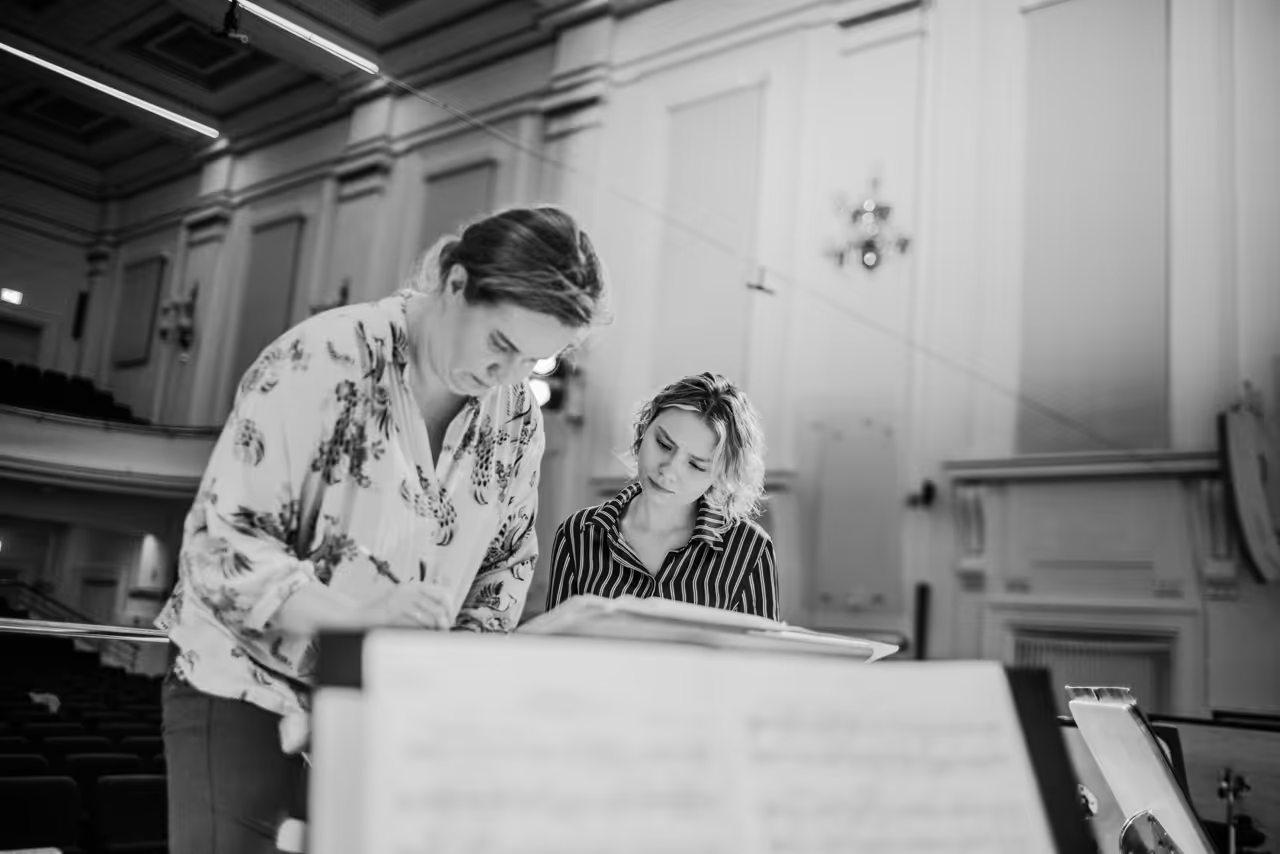
Photo by Grzesiek Mart, Krakow Philharmonic, September 14, 2025
Working with Katarzyna Marek during the inaugural concert was a great pleasure for me. Preparing such a difficult program, including works by Penderecki, Bernstein, Williams, and Shostakovich, required proper focus, excellent communication, and the ability to react quickly. Katarzyna supported every stage of the work with full commitment and fulfilled her duties in an exemplary manner. Her presence during rehearsals and the concert was a huge professional support for me.
Katarzyna Tomala-Jedynak – conductor
And how do you get into such a program?
It is difficult because it is not the candidate who submits the application, but the institution. In reality, either someone who wants to submit the application finds us, or we have to find that person. Of course, the candidate for residency attaches their CV, video recording, and diploma to the submitted documents. Then, we have to wait for the results of the deliberations of a specially appointed committee.
So, despite everything, you have to run around to get it done?
Yes, because after graduation, institutions don't really know us or don't always have the opportunity to accept young conductors. I actively searched for the right person and institution to work with. I owe a lot of support to Professor Mieczysław Gawroński, in whose class I studied for five years. My current mentor participated in one of the first editions of the program herself. That's why she wanted to take part in it again, this time in a new role. After our first conversation, we felt that this was it and that we wanted to go through this adventure together. On our second attempt, we managed to get into the program.

Photo by Grzesiek Mart, Krakow Philharmonic, September 14, 2025
So does the program respond to the needs of young artists? Does it fill a gap in the market?
To be honest, I miss this type of project. I had the great honor of participating in workshops with Marin Alsop, during which I was able to stand in front of the NOSPR. It was an amazing experience, and we need more initiatives like this. Initiatives that open institutions to young people at the beginning of their professional lives. An additional advantage was that participation in the workshops was free of charge. Everyone says go to courses, but when you look at the prices...
What are your thoughts on working with Sinfonietta as a chamber orchestra?
There is something unique about the sound of a chamber orchestra – instruments from one group can create a huge variety of articulation and tone color, while maintaining cohesion. A chamber ensemble also gives you a better chance to quickly get to know all the musicians and build relationships, which is more difficult with a large ensemble. I am an extrovert and I like people, which is why contact with the orchestra is so important to me – it compensates for the hours spent alone with the score. For me, Sinfonietta Cracovia is a unique ensemble – full of passion, openness, and courage in its artistic explorations. I greatly appreciate the artists who make up the ensemble for their precision and flexibility. I feel that they are able to combine the highest level of performance with the joy of playing, and creative dialogue with them comes completely naturally.
So all that remains is for me to wish you good luck and lots of strength for the coming season. Thank you for talking to me.
Thanks!
Katarzyna Marek about "Conductor in Residence" program.

Photo by Grzesiek Mart
BIOGRAPHY
Katarzyna Marek (born in 1999) represents a generation of young Polish conductors. She gained her knowledge and experience while studying at the Karol Lipiński Academy of Music in Wrocław, which she graduated from with honors, receiving multiple scholarships from the Rector of the Academy during her studies. She studied under Prof. Mieczysław Gawroński, PhD, and also completed internships with leading Polish conductors, including Prof. Marek Pijarowski, PhD, and Prof. Marzena Diakun, PhD, as well as participating in national and international courses and workshops.
She has collaborated with Polish and foreign orchestras. She actively promotes new music, among other things by participating in premieres of works at conferences and festivals, such as Musica Electronica Nova in Wrocław and the International Faust Conference in Turin.
In the 2025/2026 season, he is collaborating with Sinfonietta Cracovia as part of the “Conductor-in-Residence” program, assisting Katarzyna Tomala-Jedynak and guest conductors, as well as conducting the orchestra himself during two concerts concluding the season.
Szymon Paruzel's article from September 9, 2025, in Presto magazine is available at: presto.pl.
The “Conductor-in-Residence” program is co-organized by the National Institute of Music and Dance. It is financed by the Minister of Culture and National Heritage.


Stay updated
Listen to us on


